



How to Choose the Right FPV Battery: Cells, mAh & C-Rating
How to Choose an FPV Battery: Start With Your Drone’s Power and Compatibility Requirements
The simplest way to choose an FPV battery is to work backward from your drone's hardware. Your flight controller, ESC, motors, connector, and frame set the limits for voltage, current, size, and weight. Check those first, then compare cell count, capacity, and C-rating.
Check the flight controller, ESC, motor, connector, and battery-space limits
Start with the voltage and current ratings printed on your components or in the manufacturer's manual. A battery that exceeds any of these limits can damage the electronics or shorten their life.
- Flight controller: Check the input voltage range. Many modern boards accept 2S–6S, but some are limited to 4S, and a few support 8S.
- ESC: Confirm the supported cell count and the continuous and burst current ratings. A 45A 4-in-1 ESC, for example, is meant to handle roughly 45A per motor.
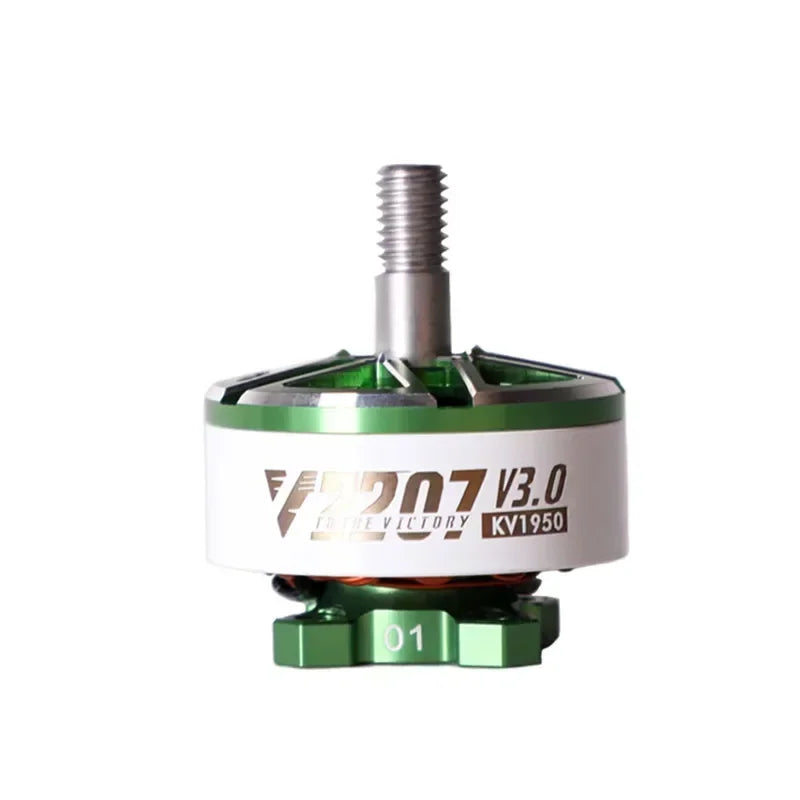
- Motors: Check the recommended cell count and propeller size. A 2207 motor rated for 6S behaves very differently on 4S.
- Connector: Match the plug to the drone. XT30 is common on 3-inch and smaller builds, while XT60 is typical on 5-inch and larger quads. Swapping connectors is possible, but soldering them poorly causes resistance and heat.
- Battery space: Measure the battery strap area or bay in length, width, and height. Many 5-inch frames fit packs around 105–120 mm long, but fit varies by frame design.
Also consider center of gravity. A pack that fits but sits too far forward or back can hurt handling, so test-fit it with the strap tightened before you fly.
Before buying, write down five numbers: maximum cell count, ESC current rating, connector type, available battery dimensions, and target all-up weight.
Compare LiPo and Li-ion batteries by current demand, flight time, and intended use
LiPo is the better choice for high-current flying such as racing and freestyle. Li-ion is better when you want maximum flight time at lower, steadier power.
LiPo packs deliver large bursts of current with limited voltage sag, which suits aggressive throttle punches. Li-ion cells, commonly 18650 or 21700 formats, offer higher energy density but handle high current less well. That makes them popular for long-range cruising and efficient cinewhoops.
| Feature | LiPo | Li-ion |
|---|---|---|
| Current delivery | High | Low to moderate |
| Flight time | Shorter | Longer |
| Best for | Racing, freestyle | Long-range, cruising |
If your drone draws high current during punch-outs, a Li-ion pack may sag heavily and trigger low-voltage warnings early. Choose Li-ion only if your flying style is smooth and your build is tuned for efficiency.
Choose the Right Cell Count for Voltage, Motor KV, and Flight Style
Cell count is the first electrical choice to lock in once you know your drone's limits. Each LiPo cell has a nominal voltage of 3.7V (4.2V fully charged), so cell count sets your system voltage. Higher voltage means more RPM potential and less current for the same power, but it also demands components rated for it.
Compare 4S, 6S, and other cell counts for voltage, speed, and efficiency
For most pilots, the choice comes down to 4S or 6S. 4S suits smaller, lighter builds, while 6S suits 5–7 inch quads that need stronger punch and cleaner power delivery. Smaller whoops and toothpick builds use 1S–3S.
| Cell Count | Nominal / Full Voltage | Typical Use |
|---|---|---|
| 1S–2S | 3.7–7.4V / 4.2–8.4V | Tiny whoops, indoor flying |
| 3S–4S | 11.1–14.8V / 12.6–16.8V | 3–5 inch freestyle, cinewhoops |
| 6S | 22.2V / 25.2V | 5–7 inch freestyle, racing, long range |
Why does 6S often feel better? At the same power, 6S draws roughly one-third less current than 4S. Lower current means less heat in wires, connectors, and the ESC, plus less voltage sag. The tradeoff is cost, since 6S packs and compatible components are usually pricier, and the extra power can make a drone twitchy for beginners.
- Choose 4S for lighter builds, easier handling, and lower pack cost.
- Choose 6S for higher top speed, stronger throttle response, and better efficiency on 5-inch and larger quads.
- Choose 3S or lower for small, low-power aircraft designed for it.
Match battery voltage to motor KV and the manufacturer’s recommended setup
Motor KV is RPM per volt with no load, so cell count and KV must be balanced. A motor's rated voltage range is the limit that matters: stay inside what the motor, ESC, and flight controller support.
As a rough guide, a 2306 motor around 1700–1950KV is typically paired with 6S, while the same size at 2500–2800KV is built for 4S. Putting a high-KV motor on a higher cell count can overspeed the prop, overheat the motor, and exceed the ESC's current limits.
Follow this checklist before buying:
- Read the motor's recommended cell count and propeller size on the manufacturer's spec sheet.
- Confirm the ESC and flight controller voltage ratings cover the full-charge voltage (for example, 25.2V for 6S).
- Check the video transmitter and any accessories for their input voltage limits.
- Choose a prop recommended for your chosen cell count, since heavier props raise current draw.
Never assume a drone will tolerate extra cells just because the plug fits. The manufacturer's listed voltage range is the safest guide.
If you want to compare compatible packs by voltage, connector, and size, browse the selection of FPV batteries and chargers below.
Once voltage is settled, the next step is choosing capacity so the pack gives enough flight time without weighing the drone down.
Select Battery Capacity in mAh Without Adding Excessive Weight
Once you have settled on a cell count, choose the lowest capacity that delivers your target flight time with a comfortable reserve. Capacity (mAh) tells you how much energy the pack stores, but every extra 100 mAh adds weight, and that weight raises current draw, reduces agility, and can cancel out much of the flight time you hoped to gain.
Balance capacity, flight time, and battery weight for your aircraft size
Battery weight often makes up 30–50% of a quad's total takeoff weight, so capacity directly affects thrust-to-weight ratio and handling. A heavier pack makes the quad feel sluggish in flips and punch-outs, and it puts more stress on motors, ESCs, and the frame during hard landings.
A simple way to estimate flight time is to divide usable capacity by average current draw. Only about 80% of a LiPo's rated capacity is safely usable, so a 1300 mAh pack gives roughly 1040 mAh. If your quad averages 25 A during mixed freestyle flying, that is about 2.5 minutes of aggressive flying (1.04 Ah ÷ 25 A × 60), which is why real flight time depends on your throttle habits as much as on the pack.
- Check your frame and motor manufacturer's recommended battery weight and capacity range first.
- Weigh the battery with its lead and connector, since published weights are often optimistic.
- Add capacity in small steps (for example, 1100 to 1300 mAh) and compare flight time against the added grams.
- Make sure the pack fits your battery compartment and can be strapped down securely without shifting.
Use practical capacity ranges for racing, freestyle, cinematic, and long-range FPV
Typical capacity depends on aircraft size, cell count, and flying style. The ranges below are common starting points for 5-inch and larger builds, so confirm them against your motors, props, and frame limits.
| Flying style | Typical cells | Common capacity |
|---|---|---|
| Racing | 6S (some 4S) | 550–850 mAh |
| Freestyle | 6S (some 4S) | 1100–1500 mAh |
| Cinematic / GoPro | 6S | 1300–2200 mAh |
| Long-range (7-inch) | 6S Li-ion | 3000–5000 mAh |
Racers favor small, light packs because every gram improves lap times and race heats are short. Freestyle pilots accept a bit more weight for 3–5 minute sessions. Cinematic builds carry a camera and often need more capacity to keep flight time reasonable. Long-range pilots prioritize efficiency and typically choose high-capacity Li-ion packs, which trade peak current for energy density.
If a larger pack adds a minute of flight time but makes the quad noticeably less responsive, step back one capacity size and fly with a slightly more conservative throttle.
To compare options by cell count, capacity, and weight in one place, browse the FPV batteries and chargers collection at TheDroneFlight, where you can pair a pack with a compatible charger.
Understand C-Rating and Calculate Whether the Battery Can Supply Enough Current
C-rating is a multiplier that describes how much continuous current a battery can deliver relative to its capacity. To use it when you choose an FPV battery, convert it to amps: capacity in Ah × C-rating = maximum rated current. A 1300mAh 100C pack is rated for 1.3 Ah × 100 = 130A, at least on paper.
Estimate current demand from motor, propeller, and flight conditions
Your battery must supply the total peak current your four motors can draw, not just average current. The most reliable source is the motor manufacturer's thrust table, which lists amps per motor for specific propellers and voltages. Multiply the full-throttle figure by the number of motors, then compare it with the battery's real-world capability.
For example, a 5-inch freestyle quad on 6S with motors pulling roughly 35A each at full throttle has a theoretical peak of about 140A. Real flying rarely holds full throttle, so average draw may be 25–40A. Peak demand still matters during punch-outs and power loops.
These factors push current demand higher:
- Larger or higher-pitch propellers, or three-blade props with more bite.
- Higher cell count paired with the same motor and prop.
- Aggressive throttle use, such as racing or freestyle power loops.
- Heavier builds that need more throttle to hold altitude.
- Cold weather, which increases internal resistance and reduces available current.
Long-range builds sit at the opposite end. A lightweight 7-inch cruiser may draw only 10–20A, so a modest C-rating can work fine.
Compare stated C-ratings carefully and allow a realistic safety margin
Treat advertised C-ratings as marketing-grade figures, not guaranteed performance. There is no universal testing standard, so two packs labeled 100C can behave very differently. Internal resistance, build quality, and cell chemistry decide how a battery performs under load, so independent reviews and bench test data are more useful than the label.
Apply a safety margin so the pack is never working at its limit. A practical approach is to choose a battery whose rated continuous current is at least 1.5 to 2 times your expected peak draw. If your quad can peak at 140A, look for a pack that is realistically capable of 200A or more, even if the label claims higher.
| Capacity | Label C-Rating | Rated Current |
|---|---|---|
| 850mAh | 100C | 85A |
| 1100mAh | 120C | 132A |
| 1500mAh | 150C | 225A |
Higher capacity gives you more current headroom at the same C-rating, which is why a larger pack often sags less. Weigh this against the weight tradeoffs covered earlier.
If a battery overheats, puffs, or shows heavy voltage sag, the pack is likely under-rated for your build. Move to a higher-quality or higher-capacity pack rather than just chasing a bigger C-number.
Match Cells, mAh, and C-Rating to Your Build, Then Verify Performance
Use a decision framework to compare candidate batteries by voltage, capacity, current, weight, and fit
The simplest way to choose an FPV battery is to filter candidates in a fixed order: voltage first, then fit, current, capacity, and weight. Cell count and connector are pass/fail checks, so settle them before you compare anything else.
- Voltage: confirm the cell count (for example 4S or 6S) is within the limits of your ESC, flight controller, motors, and VTX.
- Fit: check length, width, height, and strap routing against the frame's battery bay, and confirm the connector (XT60, XT30, or similar) matches your power lead.
- Current: compare your estimated peak amps with the battery's realistic continuous output, and keep a safety margin of roughly 20–30%.
- Capacity: choose the largest mAh that still keeps the aircraft's weight and handling where you want them.
- Weight: confirm the final all-up weight and the effect on thrust-to-weight ratio.
Here is a quick example. Say your 5-inch freestyle quad peaks near 110 A on 6S. A 1100 mAh pack rated at 120C has a nominal 132 A burst figure, but a cautious reading of a manufacturer's spec leaves little real margin. A 1300 mAh pack with a proven record of low internal resistance may be the better pick, even if its C-rating looks similar.
| Check | Pass condition | Common mistake |
|---|---|---|
| Voltage | Within ESC/motor limits | Assuming any S-count works |
| Current | 20–30% headroom | Trusting the label C-rating |
| Weight | Target AUW met | Chasing maximum mAh |
| Fit | Secure, balanced | Ignoring battery length |
Check voltage sag, temperature, flight time, and battery condition during test flights
A battery is only right if it holds up in real flight, so test it with a short, conservative flight before committing to a full pack order. Start with a few punch-outs and hovering, then move to your normal flying style while watching your OSD and logs.
- Voltage sag: record the lowest per-cell voltage during hard throttle. If it drops below about 3.3 V per cell under load, the pack is likely undersized for the current demand.
- Temperature: land and touch the pack right away. Lukewarm is normal, but a pack that is too hot to hold comfortably points to excessive load or a worn battery.
- Flight time: land with a resting voltage near 3.7–3.8 V per cell rather than draining the pack fully, and note how many minutes that gave you.
- Battery condition: look for puffing, damaged wrap, bent connectors, and cells that drift apart in voltage after charging.
If you see heavy sag, high heat, or swelling, change the battery before changing your tune. Reducing the load or moving to a higher-quality, larger pack is safer than flying a stressed LiPo.
Log each pack's results over several flights. A battery whose sag grows or flight time shortens over time is aging, and retiring it early protects both your aircraft and your safety.
FPV Battery FAQs: Make a Safe, Practical Choice
Start with the manufacturer's recommended cell count, connector, and battery size, then choose capacity and C-rating to fit your flying style. Confirm that the flight controller, ESC, and motors accept the battery's voltage, and that the pack physically fits your frame and balances correctly on the aircraft.
For example, a 5-inch freestyle quad commonly runs a 6S pack in the 1100–1500 mAh range with an XT60 connector. A 3.5-inch cinewhoop may be better served by a lighter 4S pack. Compare two or three candidate packs by weight, rated discharge, and internal resistance, and choose the lightest one that keeps voltage sag acceptable during hard throttle punches.
No. Higher mAh adds flight time only until the extra weight cancels the gain. A larger pack makes the motors draw more current just to hover, which can reduce agility, raise motor and ESC temperatures, and make crashes harder on the frame and arms.
A practical approach is to increase capacity in small steps, such as moving from 1300 mAh to 1500 mAh, and then compare real flight time, handling, and motor temperature after landing. If the aircraft feels sluggish or the motors come down warm, the pack is probably too heavy. Racing pilots often go smaller on purpose, while long-range builds benefit from larger or Li-ion packs because efficiency matters more than snap response.
You need a battery whose real continuous discharge capability exceeds your aircraft's peak current draw with a safety margin. Calculate it by multiplying capacity in amp-hours by the C-rating. A 1300 mAh pack rated at 100C suggests a theoretical 130 A, while a 1500 mAh pack at 150C suggests 225 A.
Treat those figures cautiously, since manufacturers measure C-ratings differently and the numbers are often optimistic. As a rule of thumb, aim for a stated rating at least 30–50% above your estimated peak current. Then verify it in practice by checking voltage sag in your OSD or blackbox logs and watching how warm the pack is after a flight. A pack that sags heavily or comes down hot is underperforming regardless of what the label says.
Only if every component in the power system is rated for the new voltage. Moving from 4S to 6S raises full-charge voltage from about 16.8 V to 25.2 V, which can damage an ESC, flight controller regulator, VTX, or other accessories that are not rated for it. Motors with a high KV rating can also overspeed and overheat on a higher cell count.
Check the voltage range printed on the ESC, flight controller, and video transmitter, and compare it with the motor manufacturer's recommended setup. If you do change cell count, you will also usually need to adjust the propeller size, throttle limit, and low-voltage warning settings. Never plug in a different pack just to test it, because an incorrect voltage can destroy electronics instantly. When in doubt, stay with the cell count the manufacturer specifies for your build.


